
Palm Oil carbon trapping: Is it better than the forest itself?
Last updated 2026-11-01
Going forward we need to plant more palm oil, don't be afraid of the dangers, so-called deforestation, right? Palm oil is a tree, isn't it? It is a tree, has leaves, exhaling oxygen, absorbing carbon dioxide, how come we got accused, right? Those were just naysayers. So we'll be nice, we don't need to…Translated from original speech during national development planning conference, December 2024.Musyawarah Perencanaan Pembangunan Nasional (Musrenbangnas) RPJMN Tahun 2025-2029, di Kantor Kementerian PPN/Bappenas, Jakarta, 30 Desember 2024. (Sekretariat Kabinet Republik Indonesia, 2024)
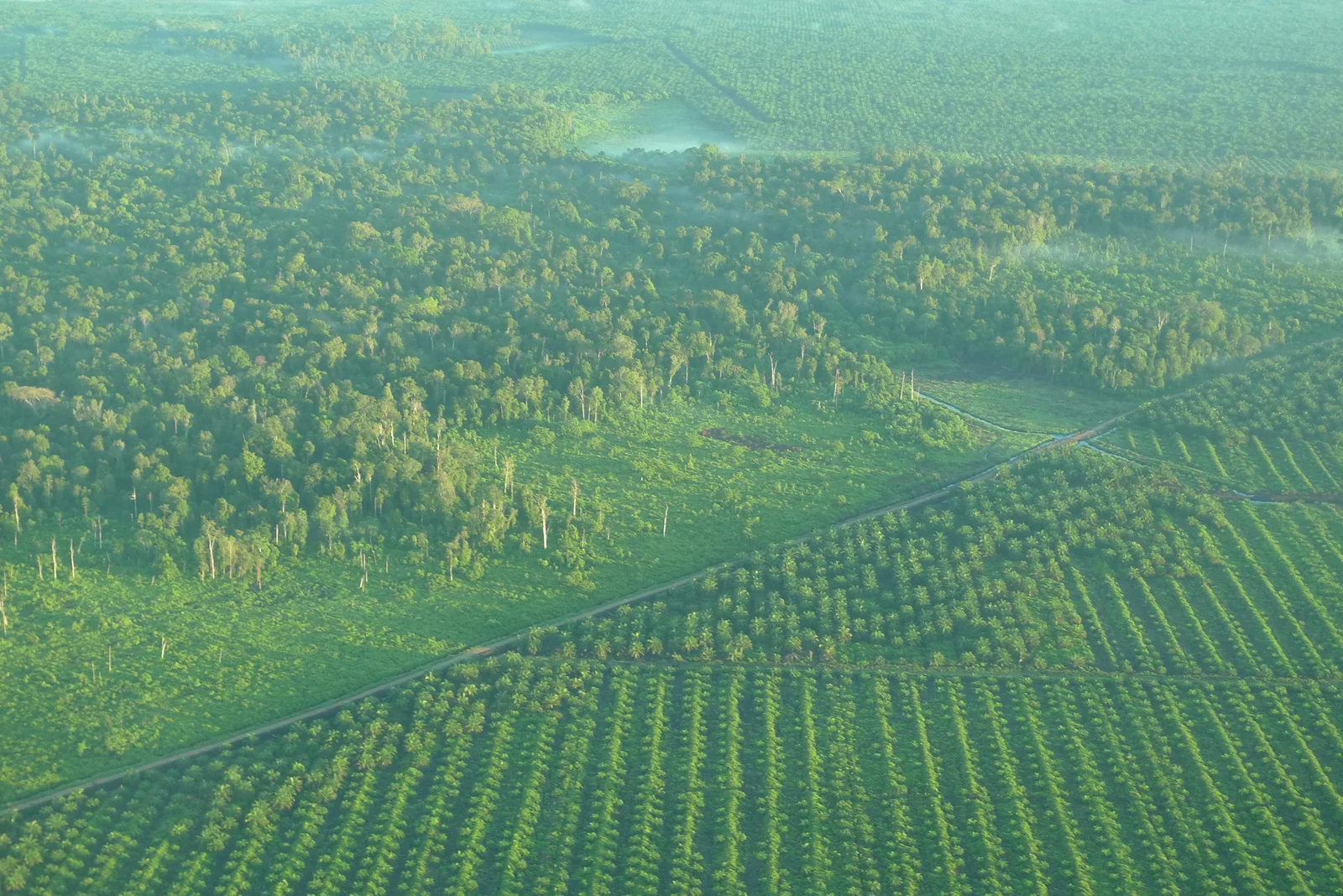
That can't be right! I think he intentionally downplays the impact of palm oil plantations. Palm oil is a significant driver of deforestation, with 45% of plantations in Asia comes from opening forestsThe Impacts of Oil Palm on Recent Deforestation and Biodiversity Loss. (Vijay et al., 2016)The Impacts of Oil Palm on Recent Deforestation and Biodiversity Loss. (Vijay et al., 2016). Products using palm oil are used in food preparation, cosmetics, cleaning products, biofuel, and many othersOil palm and biodiversity. (Meijaard et al., 2018)Oil palm and biodiversity. (Meijaard et al., 2018). It is the most productive crop out of all vegetable oils with an average oil yield of 3.5-4.0 tonnes per hectare, and made up about 42% of the global vegetable oil market shareIbid.Oil palm and biodiversity. (Meijaard et al., 2018)OECD‑FAO Agricultural Outlook 2025‑2034. (OECD et al., 2025)OECD‑FAO Agricultural Outlook 2025‑2034. (OECD et al., 2025).
South Papua has been the target of new palm oil concessions, with the central government granting 146000 hectares to various corporations in late 2025Pemerintah Mau Sulap 481 Ribu Ha Hutan Papua Jadi Kawasan Food Estate. (CNN Indonesia, 2025)Pemerintah Mau Sulap 481 Ribu Ha Hutan Papua Jadi Kawasan Food Estate. (CNN Indonesia, 2025). One of the largest operating conglomerates in the area includes Korindo with 50000 hectares and POSCO with 39900 hectaresPOSCO International. (SPOTT-ZSL, 2025)POSCO International. (SPOTT-ZSL, 2025)Burning Paradise: Palm Oil in the Land of the Tree Kangaroo. (Bellantonio et al., 2016)Burning Paradise: Palm Oil in the Land of the Tree Kangaroo. (Bellantonio et al., 2016). Some of these existing palm oil tracts were either primary or secondary forest harboring many biodiversity and indigenous people before being turned into a palm monocultureIbid.Burning Paradise: Palm Oil in the Land of the Tree Kangaroo. (Bellantonio et al., 2016).
Technically though, palm oil tree is a tree. Putting the environmental and social atrocities aside, can we measure how palm oil absorbs carbon compared to the forest it replaces?
Measuring carbon absorption
Gross Primary Productivity (GPP) refers to the amount of carbon absorbed from the atmosphere by vegetation photosynthesis, and it is a major player in the atmosphere's CO2 exchangeTerrestrial Gross Carbon Dioxide Uptake: Global Distribution and Covariation with Climate. (Beer et al., 2010)Terrestrial Gross Carbon Dioxide Uptake: Global Distribution and Covariation with Climate. (Beer et al., 2010). Moderate Resolution Imaging Spectrometer (MODIS) is a series of remote sensing products from NASA that measures land and atmospheric conditions. Global Land Surface Satellite (GLASS) improves MODIS' GPP prediction accuracy using the Eddy Covariance-Light Use Efficiency (EC-LUE) modelThe Global Land Surface Satellite (GLASS) Product Suite. (Liang et al., 2021)The Global Land Surface Satellite (GLASS) Product Suite. (Liang et al., 2021)Deriving a light use efficiency model from eddy covariance flux data for predicting daily gross primary production across biomes. (Yuan et al., 2007)Deriving a light use efficiency model from eddy covariance flux data for predicting daily gross primary production across biomes. (Yuan et al., 2007)Global estimates of evapotranspiration and gross primary production based on MODIS and global meteorology data. (Yuan et al., 2010)Global estimates of evapotranspiration and gross primary production based on MODIS and global meteorology data. (Yuan et al., 2010).
As the land use changes, there is a potential change in the rate of carbon productivity in the area. This research aims to measure the GPP change in Korindo's and POSCO's palm oil plantation tract between 2010 (forest), 2013 (young palm oil), and 2020 (mature palm oil) considering local climate conditions and palm oil specific properties.
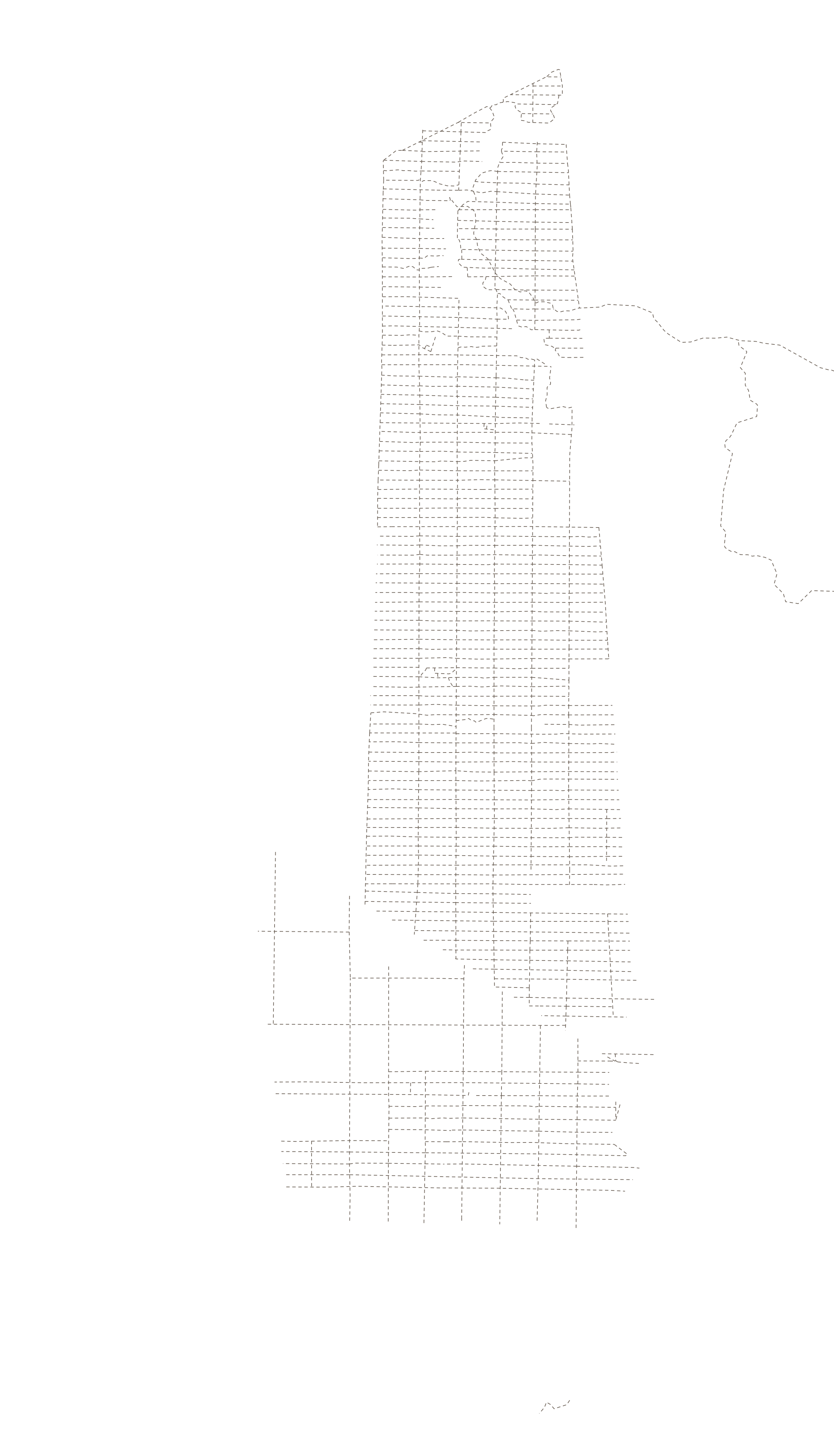
;stroke-width:.25px}svg.story-map__layer-svg%20rect:hover,svg.story-map__layer-svg%20[data-vector-feature]:hover{stroke:%23111;stroke-width:1px}%3c/style%3e%3cg%20data-map-layer='boundary-n'%3e%3cg%20data-vector-feature='1'%20data-name='Northern%20plantation%20boundary'%3e%3ctitle%3eNorthern%20plantation%20boundary%3c/title%3e%3cpath%20d='M10141,4252%20L14923,1780%20L15791,12570%20L10089,12546%20L10141,4252'%20fill='none'%20stroke='%23b24a3b'%20stroke-width='90'/%3e%3c/g%3e%3c/g%3e%3c/svg%3e)
;stroke-width:.25px}svg.story-map__layer-svg%20rect:hover,svg.story-map__layer-svg%20[data-vector-feature]:hover{stroke:%23111;stroke-width:1px}%3c/style%3e%3cg%20data-map-layer='boundary-s'%3e%3cg%20data-vector-feature='1'%20data-name='Southern%20plantation%20boundary'%3e%3ctitle%3eSouthern%20plantation%20boundary%3c/title%3e%3cpath%20d='M6615,22197%20L7168,28252%20L7723,32477%20L17221,32794%20L16219,28164%20L6615,22197'%20fill='none'%20stroke='%233d6fa3'%20stroke-width='90'/%3e%3c/g%3e%3c/g%3e%3c/svg%3e)






Methodology
The area to be investigated is POSCO's Berkat Cipta Abadi plantation and the western portion of Korindo's Bio Inti Agrindo plantation, both located between 6.7°–7.0° S and 140.4°–140.6° E, near the border between Merauke and Boven Digul regency. We further restrict the area to the 2013 planting boundary since not all plantation area were cleared and planted at the same time.
| Constant | Value | Description | Source |
|---|---|---|---|
| 2.14 g C m-2 MJ-1 | Global potential light use efficiency constant | Deriving a light use efficiency model from eddy covariance flux data for predicting daily gross primary production across biomes. (Yuan et al., 2007)Deriving a light use efficiency model from eddy covariance flux data for predicting daily gross primary production across biomes. (Yuan et al., 2007) | |
| 2013 | 27.5 °C | Average 2013 air temperature, Tanah Merah weather station | BOVEN DIGUL/TANAH MERAH - Weather data by years. (MeteoManz, n.d.)BOVEN DIGUL/TANAH MERAH - Weather data by years. (MeteoManz, n.d.) |
| 2020 | 27.9 °C | Average 2020 air temperature, Tanah Merah weather station | Ibid.BOVEN DIGUL/TANAH MERAH - Weather data by years. (MeteoManz, n.d.) |
| 23 °C | Minimum temperature for growing palm oil | Growth and production of oil palm. (Verheye, 2010)Growth and production of oil palm. (Verheye, 2010) | |
| 31 °C | Maximum temperature for growing palm oil | Ibid.Growth and production of oil palm. (Verheye, 2010) | |
| 27 °C | Optimal temperature for growing palm oil | Ibid.Growth and production of oil palm. (Verheye, 2010) | |
| young | 918 mm yr-1 | Young palm oil evapotranspiration rate | Controls of water and energy fluxes in oil palm plantations: Environmental variables and oil palm age. (Meijide et al., 2017)Controls of water and energy fluxes in oil palm plantations: Environmental variables and oil palm age. (Meijide et al., 2017) |
| mature | 1216 mm yr-1 | Mature palm oil evapotranspiration rate | Ibid.Controls of water and energy fluxes in oil palm plantations: Environmental variables and oil palm age. (Meijide et al., 2017) |
We used the Eddy Covariance-Light Use Efficiency (EC-LUE) model to predict GPP value on both plantations, which has the following formGlobal estimates of evapotranspiration and gross primary production based on MODIS and global meteorology data. (Yuan et al., 2010)Global estimates of evapotranspiration and gross primary production based on MODIS and global meteorology data. (Yuan et al., 2010):
where is the incident photosynthetically active radiation in MJ m-2, is the fraction of that is absorbed by the vegetation canopy, is the all-wave net radiation in MJ m-2, and is the palm oil evapotranspiration rate according to its developmental stage, since younger palm oil has significantly less activity compared to mature palm oilControls of water and energy fluxes in oil palm plantations: Environmental variables and oil palm age. (Meijide et al., 2017)Controls of water and energy fluxes in oil palm plantations: Environmental variables and oil palm age. (Meijide et al., 2017).
Temperature constant is calculated using the formula
We also validate our predicted GPP to the globally-tuned GLASS GPP, making sure our value differences is under controlEvaluation of MODIS Gross Primary Productivity of tropical oil palm in southern Peninsular Malaysia. (Tan et al., 2011)Evaluation of MODIS Gross Primary Productivity of tropical oil palm in southern Peninsular Malaysia. (Tan et al., 2011)
Results
Both Berkat Cipta Abadi (BCA) and Bio Inti Agrindo (BIA) sites report similar numbers on each stage of planting (see below). When the sites are still forests in 2010, GLASS reports 95% middle GPP values at 2600-2710 g C m-2 year-1. The predicted GPP values in 2013 when the palm oil is newly planted averages to 1746 for BCA and 1889 for BIA. When the palm oil trees are mature in 2020, 95% middle GPP values falls into 3300-3900 range for both sites, averaging out close to 3700.


Validating the predicted GPP against GLASS, we found that our model consistently made higher values in both sites and both palm oil maturities. GPP prediction on BIA site results in average excess of 317 g C m-2 year-1 over GLASS in 2013 and average excess of 938 g C m-2 year-1 in 2020. On BCA, the average excess is slightly lower at 219 for 2013 and 899 for 2020.


The map below shows the GPP difference between years. Predicted 2020 GPP are well above GLASS 2010 GPP with the middle 95% difference at 638-1142 for BIA and 869-1105 for BCA. The mean difference between mature and young palm oil is even higher at 1858 and 1937 g C m-2 year-1 for BIA and BCA respectively. Meanwhile, the mean difference between young palm oil and forest is below zero with 95% middle interval reaching above zero for both sites.


Discussion
Assuming GLASS GPP 2010 and predicted GPP 2020 as accurate, mature palm oil plantation tend to absorb more carbon from the atmosphere compared to forests. It is statistically significant on both sites, where the 95% confidence intervals sits well above zero. This result is consistent with the claims of an Indonesian palm oil interest group that palm oil sequesters more carbon per year than it replacesCarbon Sink In Oil Palm Plantations [Infographic 2024]. (PASPI, 2024)Carbon Sink In Oil Palm Plantations [Infographic 2024]. (PASPI, 2024).
However, this does not mean palm oil plantations are net carbon sinks. The land clearing itself releases a huge amount of stored carbon to the environment, especially when the old growths are burnedLand Clearing and the Biofuel Carbon Debt. (Fargione et al., 2008)Land Clearing and the Biofuel Carbon Debt. (Fargione et al., 2008). Fargione further argues that it takes 86 years to repay this "carbon debt" when using palm oil as fuel if the replaced environment is a tropical rainforest.
Our GPP prediction consistently produces higher value over GLASS (see validation). This is in line with previous findings comparing MODIS' GPP product and site measurements in Malaya in which MODIS underestimates the GPP most of the time. GLASS is an enhancement of MODIS, however the model might not necessarily be calibrated with tropical rainforest in mind Evaluation of MODIS Gross Primary Productivity of tropical oil palm in southern Peninsular Malaysia. (Tan et al., 2011)Evaluation of MODIS Gross Primary Productivity of tropical oil palm in southern Peninsular Malaysia. (Tan et al., 2011).
There are several limitations to this study. Data about palm oil concessions and their planting years are difficult to find, and we ended up manually tracing the relevant plantation boundaries visually using rasters of true-color and vegetation indices. The Indonesian Supreme Court has decided to require concession coordinates to be publicly availableMinistry of Agraria, Spatial Planning, and Land Registry v. Forest Watch Indonesia (2017)KEMENTERIAN AGRARIA DAN TATA RUANG/BADAN PERTANAHAN NASIONAL VS FOREST WATCH INDONESIA (FWI). (Mahkamah Agung, 2017), however a contradicting order from the ministry to keep information hidden for national security has not been outlawed yetMALADMINISTRASI ATAS BELUM DIBERIKANNYA INFORMASI OLEH PEJABAT PENGELOLA INFORMASI DAN DOKUMENTASI (PPID) KEMENTERIAN AGRARIA DAN TATA RUANG/BADAN PERTANAHAN NASIONAL BERUPA DOKUMEN HAK GUNA USAHA (HGU) KEPADA FOREST WATCH INDONESIA WALAUPUN TELAH TERDAPAT PUTUSAN PENGADILAN YANG TELAH BERKEKUATAN HUKUM TETAP. (Ombudsman Republik Indonesia, 2022)MALADMINISTRASI ATAS BELUM DIBERIKANNYA INFORMASI OLEH PEJABAT PENGELOLA INFORMASI DAN DOKUMENTASI (PPID) KEMENTERIAN AGRARIA DAN TATA RUANG/BADAN PERTANAHAN NASIONAL BERUPA DOKUMEN HAK GUNA USAHA (HGU) KEPADA FOREST WATCH INDONESIA WALAUPUN TELAH TERDAPAT PUTUSAN PENGADILAN YANG TELAH BERKEKUATAN HUKUM TETAP. (Ombudsman Republik Indonesia, 2022). Moreover, plantations does not get planted in one go or even in one year, so for every boundary taken, the plants' ages are not necessarily the same.
To have a reliable carbon absorption model for palm oil plantations, we need more field measurement data from many different places. One future possible development is a general model for predicting palm oil GPP, which does not require it to be global like GLASS since it only considers one species which grows mostly on tropical regionsOil palm and biodiversity. (Meijaard et al., 2018)Oil palm and biodiversity. (Meijaard et al., 2018). Another possible studies is to measure other plantations and see if it always absorb carbons faster than the environment it replaces. A losing outlier could warrant more investigation on the productivity of the plantation itself or the previous environment productivity that supposedly beat palm oil.
Bibliography
- Sekretariat Kabinet Republik Indonesia, 2024. Musyawarah Perencanaan Pembangunan Nasional (Musrenbangnas) RPJMN Tahun 2025-2029, di Kantor Kementerian PPN/Bappenas, Jakarta, 30 Desember 2024.
- Vijay et al., 2016. The Impacts of Oil Palm on Recent Deforestation and Biodiversity Loss. PLOS ONE.
- Meijaard et al., 2018. Oil palm and biodiversity. IUCN.
- OECD et al., 2025. OECD‑FAO Agricultural Outlook 2025‑2034. OECD‑FAO Agricultural Outlook.
- CNN Indonesia, 2025. Pemerintah Mau Sulap 481 Ribu Ha Hutan Papua Jadi Kawasan Food Estate. CNN Indonesia.
- SPOTT-ZSL, 2025. POSCO International. SPOTT.org.
- Bellantonio et al., 2016. Burning Paradise: Palm Oil in the Land of the Tree Kangaroo.
- Beer et al., 2010. Terrestrial Gross Carbon Dioxide Uptake: Global Distribution and Covariation with Climate. Science.
- Liang et al., 2021. The Global Land Surface Satellite (GLASS) Product Suite. Bulletin of the American Meteorological Society.
- Yuan et al., 2007. Deriving a light use efficiency model from eddy covariance flux data for predicting daily gross primary production across biomes. Agricultural and Forest Meteorology.
- Yuan et al., 2010. Global estimates of evapotranspiration and gross primary production based on MODIS and global meteorology data. Remote Sensing of Environment.
- MeteoManz, n.d. BOVEN DIGUL/TANAH MERAH - Weather data by years.
- Verheye, 2010. Growth and production of oil palm. Land use, land cover and soil sciences.
- Meijide et al., 2017. Controls of water and energy fluxes in oil palm plantations: Environmental variables and oil palm age. Agricultural and Forest Meteorology.
- Tan et al., 2011. Evaluation of MODIS Gross Primary Productivity of tropical oil palm in southern Peninsular Malaysia. 2011 IEEE International Geoscience and Remote Sensing Symposium.
- PASPI, 2024. Carbon Sink In Oil Palm Plantations [Infographic 2024]. Berita Infografis Sawit.
- Fargione et al., 2008. Land Clearing and the Biofuel Carbon Debt. Science.
- Mahkamah Agung, 2017. KEMENTERIAN AGRARIA DAN TATA RUANG/BADAN PERTANAHAN NASIONAL VS FOREST WATCH INDONESIA (FWI).
- Ombudsman Republik Indonesia, 2022. MALADMINISTRASI ATAS BELUM DIBERIKANNYA INFORMASI OLEH PEJABAT PENGELOLA INFORMASI DAN DOKUMENTASI (PPID) KEMENTERIAN AGRARIA DAN TATA RUANG/BADAN PERTANAHAN NASIONAL BERUPA DOKUMEN HAK GUNA USAHA (HGU) KEPADA FOREST WATCH INDONESIA WALAUPUN TELAH TERDAPAT PUTUSAN PENGADILAN YANG TELAH BERKEKUATAN HUKUM TETAP. Ombudsman Republik Indonesia.